Home / Blog / Warehousing and FBA for Bulky Devices
Language:
Overseas Warehouses and FBA Replenishment for Bulky Smart Pet Devices
2026-09-10|Fulfillment & Logistics|About 12 min read|PAWORIGIN Sourcing Team
Key Takeaways
Litter boxes and drying boxes are bulky freight. A 60 L enclosure can be billed by volumetric weight, so carton design affects freight cost as well as protection.
Use the two models as a portfolio: shipping from China ties up less capital but takes longer; forward stock in a warehouse or FBA offers faster delivery while committing cash to inventory and storage.
Forward stocking is infrastructure now: Shenzhen alone runs 350+ overseas warehouses covering 23 countries (Shenzhen Municipal Commerce Bureau).
Safety stock = average daily sales × replenishment cycle × volatility factor — a common practitioner formula, not an industry standard. The cycle includes 35–45 days of production plus freight and check-in.
The source reports 60,000+ units per month across coordinated product lines. Bulky SKUs consume assembly time and container space quickly, so discuss the Q4 slot early.
Bulky smart pet devices — self-cleaning litter boxes, drying boxes, large fountains — are where supply chain decisions stop being back-office details and start deciding whether the product makes money at all. The demand case keeps strengthening: self-cleaning models already took 71.2% of the smart litter box market in 2024 (Mordor Intelligence), global pet e-commerce was worth $94.89 billion in 2024 and heads toward $147.59 billion by 2030 (Grand View Research), and online is the fastest-growing pet tech channel at a 14.0% CAGR through 2033 (Grand View Research). But a bulky SKU that wins demand and loses the freight plan still loses. This article covers the four decisions that matter: how bulky freight is priced, which fulfillment model to run, where the warehouse infrastructure actually stands, and what a replenishment cadence looks like when production runs 35–45 days.
Why bulky smart devices need a different freight plan
A smart feeder fits the standard cross-border playbook. A 60-liter litter box does not. The first difference is volumetric weight: air and express carriers generally charge the greater of actual and volumetric weight. A divisor of 6,000 cm³/kg is a common example, but the applicable rule varies by carrier and route and must be confirmed with the forwarder. A large enclosure can incur a high chargeable weight despite a low scale weight. This is low-density, volume-rated cargo, which makes the ocean leg central to a bulky-SKU fulfillment plan.
FBA storage and fulfillment charges depend on size tiers, so a bulky SKU pays for space both in transit and in storage. Packaging engineering is the controllable factor: a one-piece enclosure and a flat-pack assembly differ in volumetric weight, transit damage risk and customer assembly requirements. Flat-pack can save freight volume but requires assembly and protective-packaging work; one-piece delivery offers a simpler unboxing experience at a higher volume. Decide during sampling, before tooling makes changes costly.
Direct from China vs forward stock: the two-model comparison
Every bulky SKU runs on one of two models — or, past a certain scale, on both at once.
Dimension
Direct from China
Overseas warehouse / FBA forward stock
Capital tied up
Low — you buy per order or in small batches
High — you pre-buy production plus freight plus storage months ahead
Delivery speed
Weeks; conversion suffers on marketplaces that score shipping
Days from local stock; FBA delivery experience
Per-order logistics cost
Highest on bulky items — volumetric-weight express economics
Consolidated ocean freight plus local last mile
Stockout exposure
No forward-stock buffer; availability still depends on production and upstream stock
Real — a miss on the reorder calendar costs the whole velocity curve
Returns handling
Painful — return freight can exceed product value
Manageable — inspect, refurbish, reship locally
Fits
Product validation, test units, long-tail SKUs and cash-constrained launches
Proven high-volume SKUs, Q4 peaks and marketplace growth
Table 1 — The two fulfillment models for bulky smart pet devices. Most brands run both, split by SKU maturity.
Validate demand by direct shipping, then forward-stock the proven SKUs. A new litter box should earn its warehouse allocation through sales evidence.
Where the warehouses are: the Shenzhen infrastructure
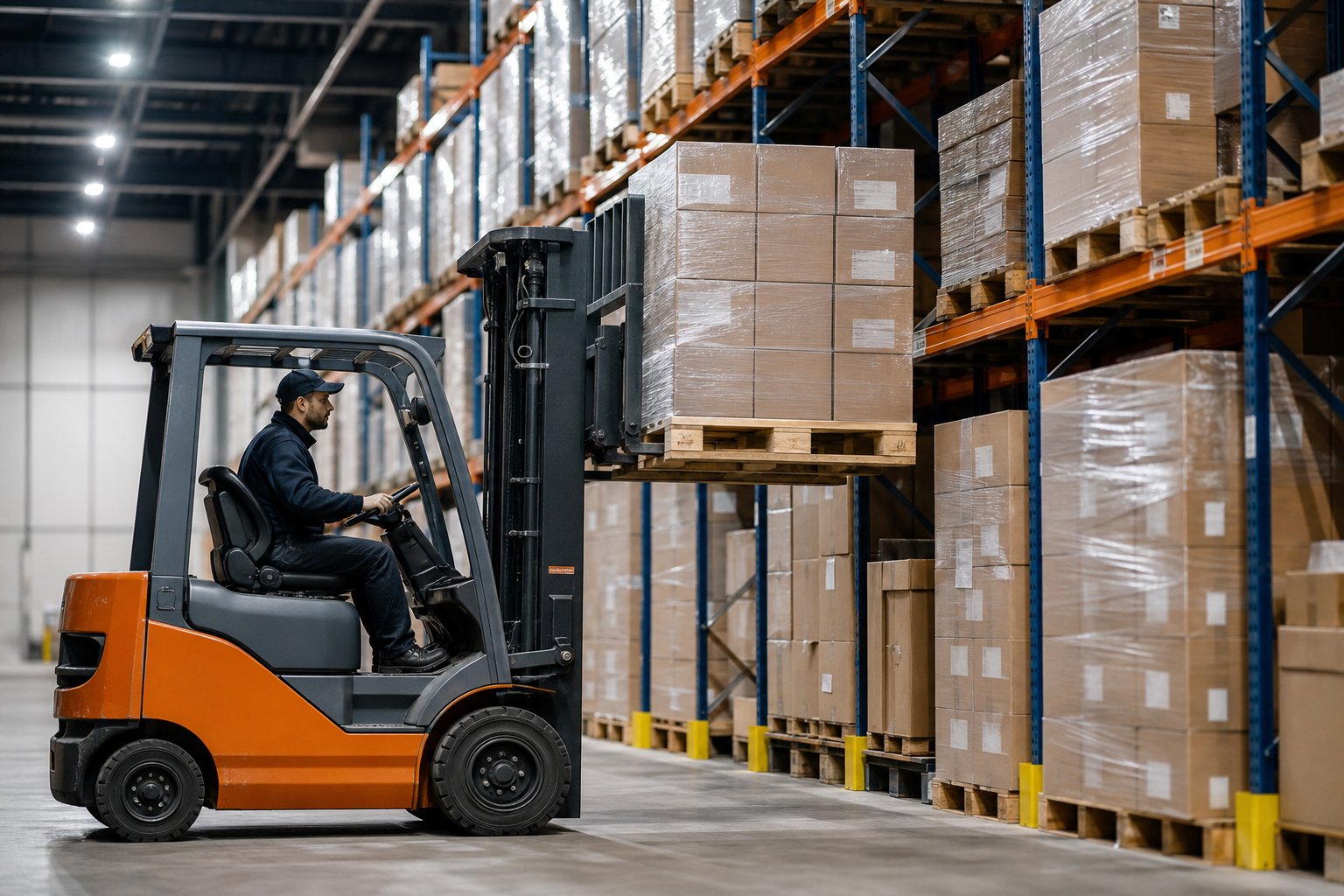
Forward stocking used to be a scale privilege; infrastructure has changed that. Shenzhen — the same city cluster that builds the devices — reports more than 350 overseas warehouses covering 23 countries and over 3.65 million square meters, roughly one-fifth of the national count (Shenzhen Municipal Commerce Bureau). The same source reports over 150,000 cross-border e-commerce sellers, about half the national total, and 2024 cross-border import-export above RMB 300 billion. These cited figures describe the ecosystem, not PAWORIGIN’s own warehouse network. For buyers, existing warehouse infrastructure makes forward stocking a scheduling and service-selection task: arrange the production slot, sailing and receiving plan.
Ask whether the supplier can hand palletized and correctly labeled goods directly to the consolidated ocean shipment, with the required FBA carton marks applied before loading. This can reduce an extra handling stage. Confirm the service and its cost as directly as the product price.
A replenishment cadence that survives Q4
With a 35–45 day production window plus ocean freight plus check-in, bulky replenishment is a calendar exercise. The working formula most operators run — a common practitioner approach, not an industry standard — is:
The cycle is end-to-end: production, sailing, receiving and check-in. The volatility factor absorbs promotion spikes and forecast error — higher for new listings and promo-heavy calendars, lower for steady established ASINs. The table below runs one illustrative pass on a litter box SKU; every number is an assumption for demonstration, not a benchmark.
Parameter
Illustrative value
Notes
Average daily sales
8 units/day
From your listing data
Replenishment cycle
77 days
Production 40 + ocean 30 + check-in 7 (illustrative split)
Volatility factor
1.2
Illustrative practitioner multiplier; select separately for the SKU and promotion plan
Safety stock
≈ 740 units
8 × 77 × 1.2 — per the common-practice formula above
Reorder trigger
≈ 1,360 units
ADS × cycle + safety stock — the level at which the next PO must be placed
Table 2 — Illustrative replenishment math for one bulky SKU. Formula is common practitioner practice; all values are assumptions for demonstration.
Recalculate the replenishment cycle monthly. A one-week sailing delay adds 7 days; at 8 units per day, that adds 56 units of cycle demand. Recalculate the safety buffer separately using the stated volatility factor. Then split the buffer: a 3PL can hold the safety layer while FBA holds selling stock, allowing a demand spike to be met by a local transfer rather than emergency air freight.
For Q4, work backward from the required shelf date: sample in early summer, place the bulk order after approval, allow sailing contingency and plan receiving before the peak-rate window. Starting the conversation only in September can leave too little contingency. This is planning guidance, not an industry standard or a guaranteed delivery schedule.
Book coordinated production capacity before the season
The source reports coordinated capacity from two Shenzhen SMT lines, three assembly lines across Shenzhen and Cixi, and an injection workshop in Dongguan, with 60,000+ units of monthly output across all categories. Available capacity still varies by model: bulky enclosures consume assembly time, floor area and container volume faster than small feeders. Q4 quantities therefore need space on both the production line and the sailing.
Discuss capacity during sampling, agree the weekly ramp-up plan as sales develop, and book peak-season freight early. Confirm who controls the actual production slot and how changes are communicated, including where a coordinated partner line is involved.
Frequently asked questions
Should bulky smart pet devices go FBA or to a third-party overseas warehouse?
It depends on the SKU’s stage. A common approach is to validate demand through direct shipping, then place proven inventory in FBA for delivery speed while using a 3PL for overflow and returns. A 3PL can offer better storage economics for slow-moving bulky stock.
Is the safety-stock formula an industry standard?
No. The source uses average daily sales × replenishment cycle × volatility factor as a practitioner planning heuristic, not a prescribed standard. Its inputs and factor depend on listing history, promotions and cash constraints. Treat the result as an initial buffer and adjust it against actual stockouts.
How much lead time should I plan before Q4?
Work backwards from the shelf date: sampling 15–20 days and bulk 35–45 days at the factory, plus ocean freight and marketplace check-in. For a bulky Q4 SKU the PO lands in summer and the sample round before that — spring is not too early to open the capacity conversation.
Can a 60 L smart litter box ship directly to one consumer?
Yes, but compare the cost. A 60 L enclosure is bulky, volume-rated cargo, so per-order cross-border express shipping can be expensive. Consolidating the ocean leg and delivering from local stock may be more economical. The source recommends direct shipping mainly for test units, replacements and overflow orders.
Planning a bulky SKU for Q4?
Tell us the SKU and target market. We will map the production window, the sailing and the warehouse plan — FBA check-in included — against your shelf date.
Overseas Warehouses and FBA Replenishment for Bulky Smart Pet Devices
2026-09-10|Fulfillment & Logistics|About 12 min read|PAWORIGIN Sourcing Team
Key Takeaways
Litter boxes and drying boxes are bulky freight. A 60 L enclosure can be billed by volumetric weight, so carton design affects freight cost as well as protection.
Use the two models as a portfolio: shipping from China ties up less capital but takes longer; forward stock in a warehouse or FBA offers faster delivery while committing cash to inventory and storage.
Forward stocking is infrastructure now: Shenzhen alone runs 350+ overseas warehouses covering 23 countries (Shenzhen Municipal Commerce Bureau).
Safety stock = average daily sales × replenishment cycle × volatility factor — a common practitioner formula, not an industry standard. The cycle includes 35–45 days of production plus freight and check-in.
The source reports 60,000+ units per month across coordinated product lines. Bulky SKUs consume assembly time and container space quickly, so discuss the Q4 slot early.
Bulky smart pet devices — self-cleaning litter boxes, drying boxes, large fountains — are where supply chain decisions stop being back-office details and start deciding whether the product makes money at all. The demand case keeps strengthening: self-cleaning models already took 71.2% of the smart litter box market in 2024 (Mordor Intelligence), global pet e-commerce was worth $94.89 billion in 2024 and heads toward $147.59 billion by 2030 (Grand View Research), and online is the fastest-growing pet tech channel at a 14.0% CAGR through 2033 (Grand View Research). But a bulky SKU that wins demand and loses the freight plan still loses. This article covers the four decisions that matter: how bulky freight is priced, which fulfillment model to run, where the warehouse infrastructure actually stands, and what a replenishment cadence looks like when production runs 35–45 days.
Why bulky smart devices need a different freight plan
A smart feeder fits the standard cross-border playbook. A 60-liter litter box does not. The first difference is volumetric weight: air and express carriers generally charge the greater of actual and volumetric weight. A divisor of 6,000 cm³/kg is a common example, but the applicable rule varies by carrier and route and must be confirmed with the forwarder. A large enclosure can incur a high chargeable weight despite a low scale weight. This is low-density, volume-rated cargo, which makes the ocean leg central to a bulky-SKU fulfillment plan.
FBA storage and fulfillment charges depend on size tiers, so a bulky SKU pays for space both in transit and in storage. Packaging engineering is the controllable factor: a one-piece enclosure and a flat-pack assembly differ in volumetric weight, transit damage risk and customer assembly requirements. Flat-pack can save freight volume but requires assembly and protective-packaging work; one-piece delivery offers a simpler unboxing experience at a higher volume. Decide during sampling, before tooling makes changes costly.
Direct from China vs forward stock: the two-model comparison
Every bulky SKU runs on one of two models — or, past a certain scale, on both at once.
Dimension
Direct from China
Overseas warehouse / FBA forward stock
Capital tied up
Low — you buy per order or in small batches
High — you pre-buy production plus freight plus storage months ahead
Delivery speed
Weeks; conversion suffers on marketplaces that score shipping
Days from local stock; FBA delivery experience
Per-order logistics cost
Highest on bulky items — volumetric-weight express economics
Consolidated ocean freight plus local last mile
Stockout exposure
No forward-stock buffer; availability still depends on production and upstream stock
Real — a miss on the reorder calendar costs the whole velocity curve
Returns handling
Painful — return freight can exceed product value
Manageable — inspect, refurbish, reship locally
Fits
Product validation, test units, long-tail SKUs and cash-constrained launches
Proven high-volume SKUs, Q4 peaks and marketplace growth
Table 1 — The two fulfillment models for bulky smart pet devices. Most brands run both, split by SKU maturity.
Validate demand by direct shipping, then forward-stock the proven SKUs. A new litter box should earn its warehouse allocation through sales evidence.
Where the warehouses are: the Shenzhen infrastructure
Forward stocking used to be a scale privilege; infrastructure has changed that. Shenzhen — the same city cluster that builds the devices — reports more than 350 overseas warehouses covering 23 countries and over 3.65 million square meters, roughly one-fifth of the national count (Shenzhen Municipal Commerce Bureau). The same source reports over 150,000 cross-border e-commerce sellers, about half the national total, and 2024 cross-border import-export above RMB 300 billion. These cited figures describe the ecosystem, not PAWORIGIN’s own warehouse network. For buyers, existing warehouse infrastructure makes forward stocking a scheduling and service-selection task: arrange the production slot, sailing and receiving plan.
Ask whether the supplier can hand palletized and correctly labeled goods directly to the consolidated ocean shipment, with the required FBA carton marks applied before loading. This can reduce an extra handling stage. Confirm the service and its cost as directly as the product price.
A replenishment cadence that survives Q4
With a 35–45 day production window plus ocean freight plus check-in, bulky replenishment is a calendar exercise. The working formula most operators run — a common practitioner approach, not an industry standard — is:
The cycle is end-to-end: production, sailing, receiving and check-in. The volatility factor absorbs promotion spikes and forecast error — higher for new listings and promo-heavy calendars, lower for steady established ASINs. The table below runs one illustrative pass on a litter box SKU; every number is an assumption for demonstration, not a benchmark.
Parameter
Illustrative value
Notes
Average daily sales
8 units/day
From your listing data
Replenishment cycle
77 days
Production 40 + ocean 30 + check-in 7 (illustrative split)
Volatility factor
1.2
Illustrative practitioner multiplier; select separately for the SKU and promotion plan
Safety stock
≈ 740 units
8 × 77 × 1.2 — per the common-practice formula above
Reorder trigger
≈ 1,360 units
ADS × cycle + safety stock — the level at which the next PO must be placed
Table 2 — Illustrative replenishment math for one bulky SKU. Formula is common practitioner practice; all values are assumptions for demonstration.
Recalculate the replenishment cycle monthly. A one-week sailing delay adds 7 days; at 8 units per day, that adds 56 units of cycle demand. Recalculate the safety buffer separately using the stated volatility factor. Then split the buffer: a 3PL can hold the safety layer while FBA holds selling stock, allowing a demand spike to be met by a local transfer rather than emergency air freight.
For Q4, work backward from the required shelf date: sample in early summer, place the bulk order after approval, allow sailing contingency and plan receiving before the peak-rate window. Starting the conversation only in September can leave too little contingency. This is planning guidance, not an industry standard or a guaranteed delivery schedule.
Book coordinated production capacity before the season
The source reports coordinated capacity from two Shenzhen SMT lines, three assembly lines across Shenzhen and Cixi, and an injection workshop in Dongguan, with 60,000+ units of monthly output across all categories. Available capacity still varies by model: bulky enclosures consume assembly time, floor area and container volume faster than small feeders. Q4 quantities therefore need space on both the production line and the sailing.
Discuss capacity during sampling, agree the weekly ramp-up plan as sales develop, and book peak-season freight early. Confirm who controls the actual production slot and how changes are communicated, including where a coordinated partner line is involved.
Frequently asked questions
Should bulky smart pet devices go FBA or to a third-party overseas warehouse?
It depends on the SKU’s stage. A common approach is to validate demand through direct shipping, then place proven inventory in FBA for delivery speed while using a 3PL for overflow and returns. A 3PL can offer better storage economics for slow-moving bulky stock.
Is the safety-stock formula an industry standard?
No. The source uses average daily sales × replenishment cycle × volatility factor as a practitioner planning heuristic, not a prescribed standard. Its inputs and factor depend on listing history, promotions and cash constraints. Treat the result as an initial buffer and adjust it against actual stockouts.
How much lead time should I plan before Q4?
Work backwards from the shelf date: sampling 15–20 days and bulk 35–45 days at the factory, plus ocean freight and marketplace check-in. For a bulky Q4 SKU the PO lands in summer and the sample round before that — spring is not too early to open the capacity conversation.
Can a 60 L smart litter box ship directly to one consumer?
Yes, but compare the cost. A 60 L enclosure is bulky, volume-rated cargo, so per-order cross-border express shipping can be expensive. Consolidating the ocean leg and delivering from local stock may be more economical. The source recommends direct shipping mainly for test units, replacements and overflow orders.
To plan production and replenishment for a bulky SKU, Contact Us。